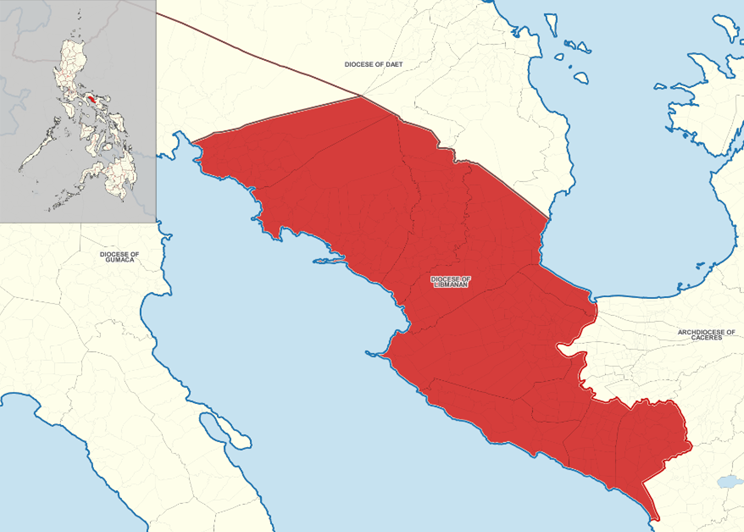

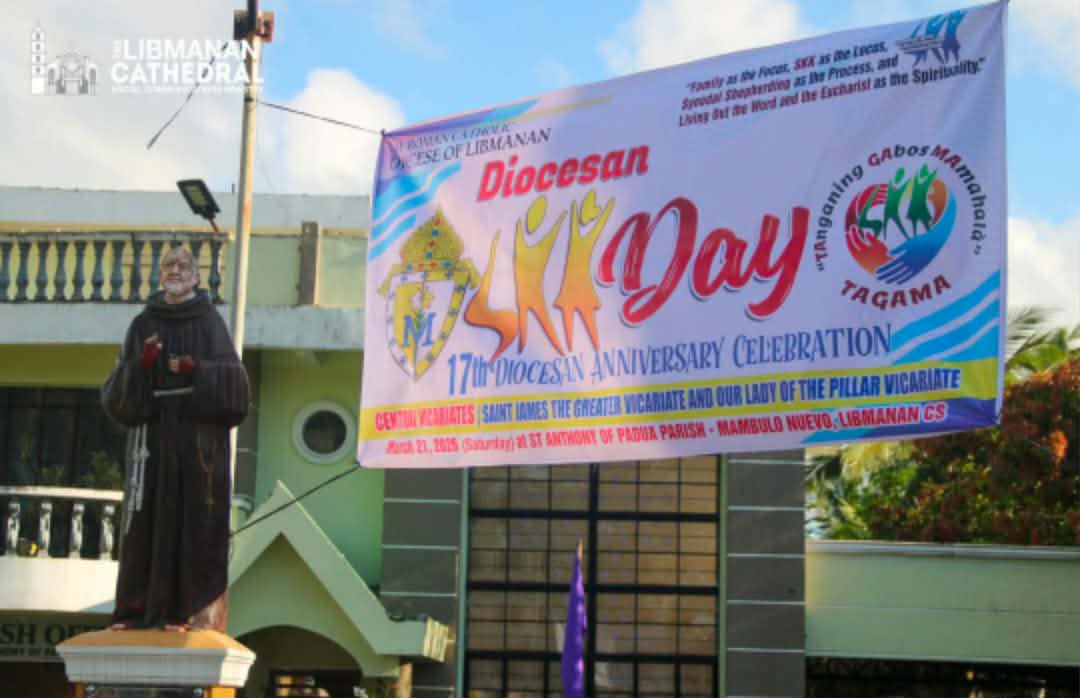
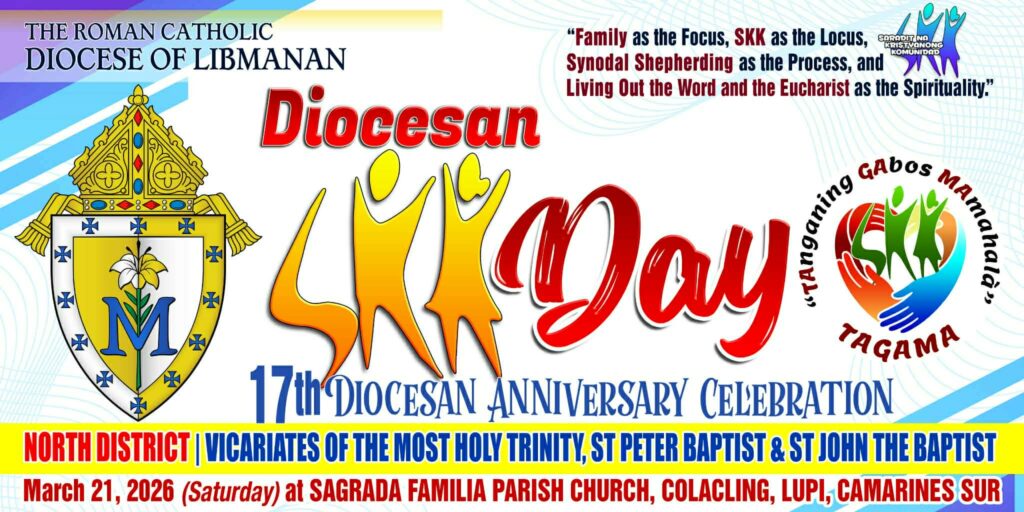
LIBMANAN, Camarines Sur — Cluster leaders of the Saradit na Kristianong Komunidad (SKK) from across the Diocese of Libmanan gathered on March 21, 2026, in three separate venues to celebrate the “Diocesan Day,” commemorating the 17th anniversary of the elevation of the Prelature of Libmanan into a diocese on March 25, 2009.
To accommodate the large number of participants, simultaneous gatherings were held in Colacling, Lupi for the North District; Mambulo, Libmanan for the Central District; and San Fernando, Camarines Sur for the South District. The occasion brought together lay leaders in a spirit of thanksgiving, renewal, and deeper commitment to the Church’s pastoral mission.
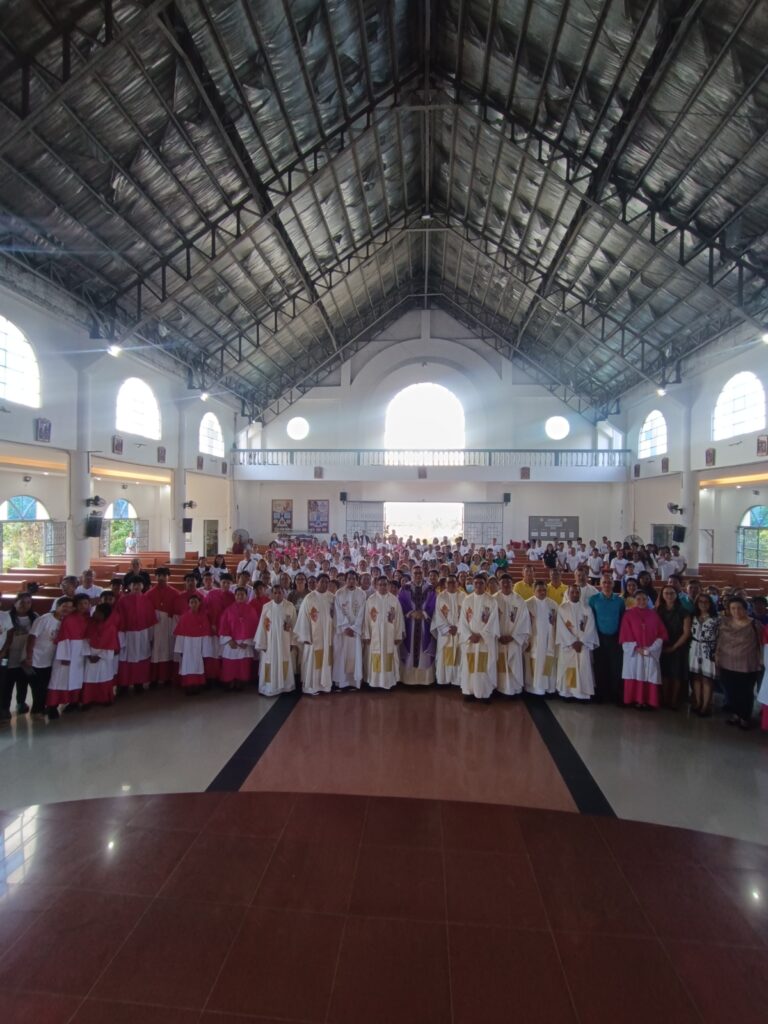
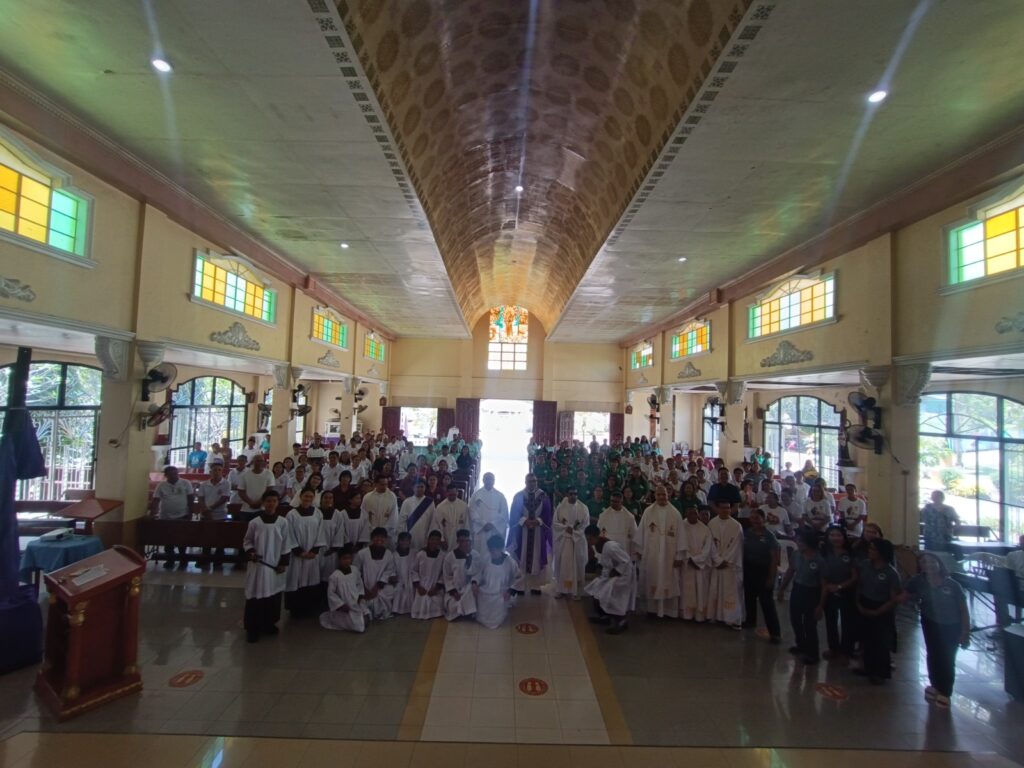
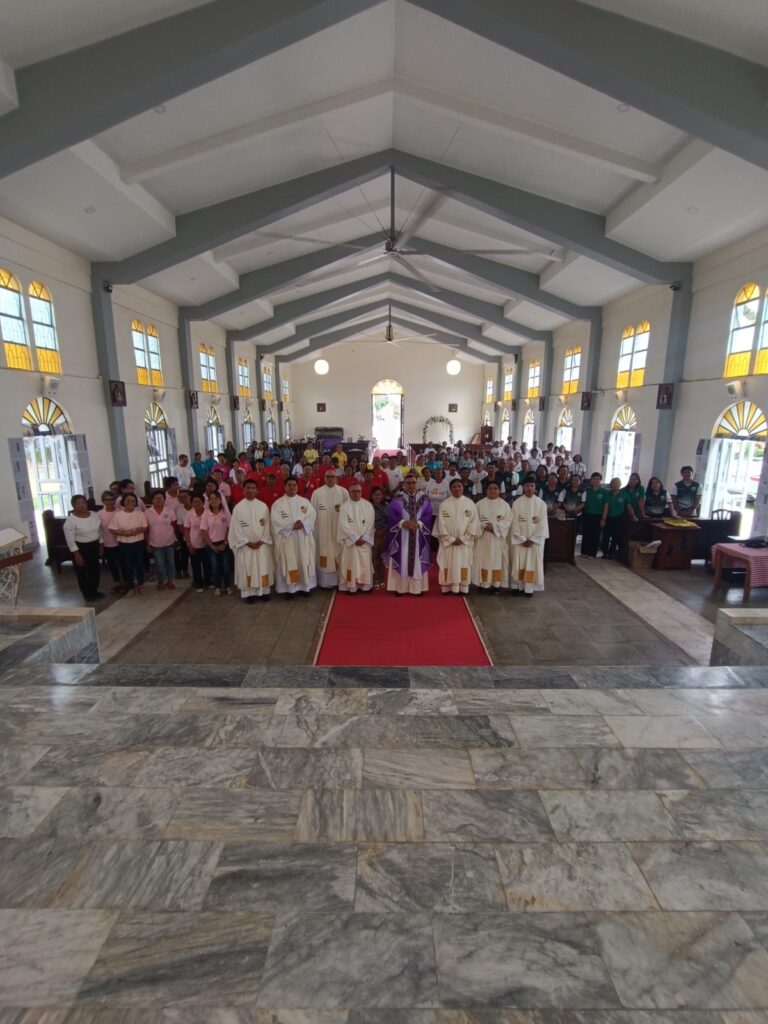
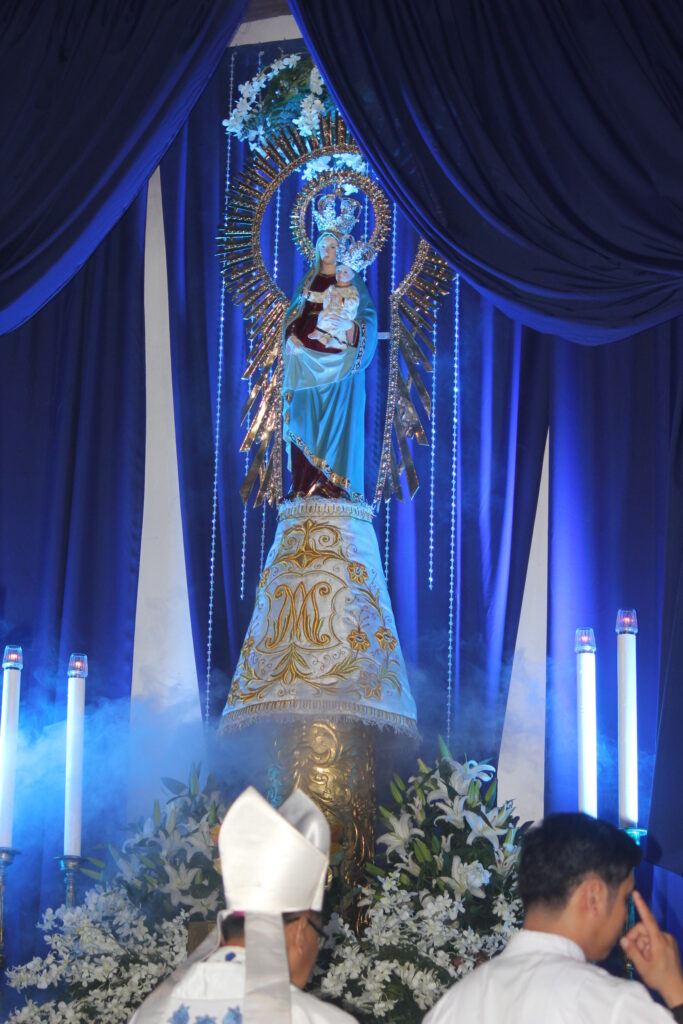
The highlight of each gathering was the celebration of the Eucharist presided over by the diocesan bishop, whose homily reflected on the Gospel of the day (John 7:40–53). He noted that the divisions and conflicts experienced in the present time mirror those during the time of Jesus, as illustrated by the differing reactions to His person in the Gospel. In this light, he emphasized that the vision of the local Church of Libmanan—to journey toward communion—is both timely and deeply relevant.
A key feature of the event was a comprehensive presentation on the diocese’s 5-dimensional pastoral program. The talks were delivered by Fr. Edgar Abogado in the North District, Sir Richard Cañas in the Central District, and Madam Marines Santiago in the South District. Each speaker provided an in-depth explanation of the pastoral framework guiding the local Church.
They emphasized that the mission of the Diocese of Libmanan—rooted in Christ’s mandate, “Feed my sheep”—is fundamentally a shepherding mission. This mission flows from the Church’s identity as a communion of Small Christian Communities and its vision of becoming a Church journeying together toward communion while serving as a living witness to the Kingdom of God.
The pastoral program identifies three key spheres of shepherding praxis: liturgy, development, and liberation. These are concretely expressed through five integrated dimensions: building a renewed evangelized and evangelizing community; fostering a renewed life of holiness and service; forming renewed agents of change; strengthening renewed social ministry; and promoting renewed responsible stewardship.
The integration of these dimensions is symbolized in the diocesan stewardship concept “Tagama,” originally understood as “Tanganing gabos mag-ako,” and now reframed as “Tanganing gabos mamahala.” The phrase reflects the program’s core elements: tanganing (purpose), referring to the fulfillment of the Church’s vision; gabos (all), highlighting the participation of all the faithful in the mission; and mamahala (to shepherd or govern), pointing to active involvement in various ministries such as liturgy, catechesis, biblical apostolate, social action, communication, administration, finance, etc.
Ultimately, the pastoral program envisions a synodal, worshiping Church in the sphere of liturgy, characterized by active participation; a synodal, caring Church in the sphere of development, grounded in communion; and a synodal, evangelizing Church in the sphere of liberation, driven by mission.
Following the talks, participants engaged in sharing sessions where they presented best practices from their respective parishes in implementing the diocesan pastoral program. The exchanges fostered mutual learning and strengthened the sense of unity among the communities. As the gatherings concluded, participants returned to their parishes renewed in spirit and more committed to advancing the mission of the local Church of Libmanan.